
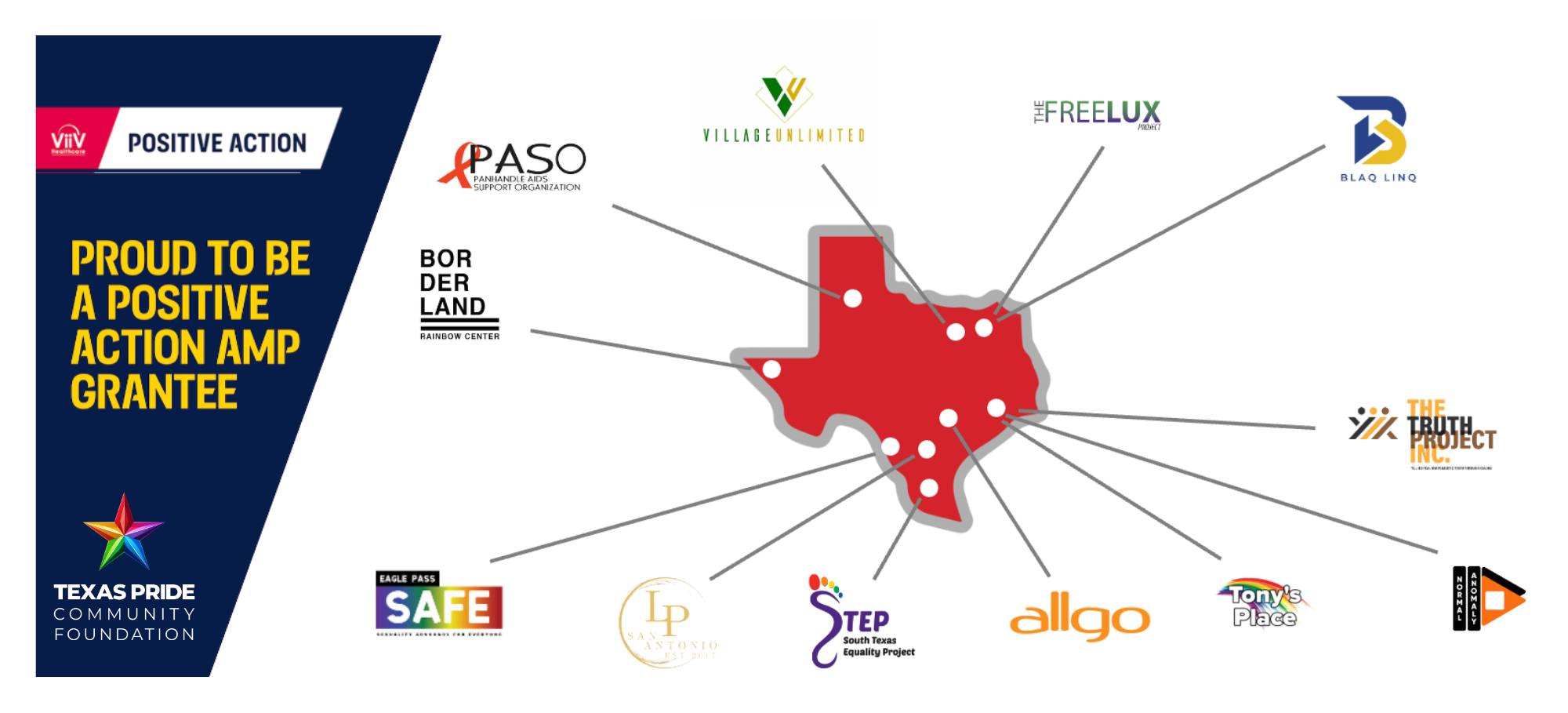

Hardheaded Foundation's C.A.M.P.B (Cultivating, Amplifying, Mobilizing and Protecting Ballroom) HIV Impact Initiative is a Program of The Hardheaded Foundation that enables homegrown strategies developed and supported by the “House and Ballroom Community” (HBC) priority population to inform the more equitable distribution of education, testing, network building, linkage/relinkage to HIV care, and support services for members of the House/Ballroom, Transgender and Gender Non-conforming communities of color in Texas who are living with or vulnerable to HIV.
Village Unlimited's Project E.P.I.C. addresses social isolation through community conversations virtually and in-person to address HIV Stigma and loneliness. Project E.P.I.C is modeled after Peer Health Navigation Services provided to the African American community as a part a Stigma Reduction Campaign.
Elevate North Texas is allocating resources toward the outreach portion of their Hotel Voucher Emergency Shelter Program for unsheltered young adults who are vulnerable to HIV. Increasing their outreach for the shelter program, they will reach a greater number of at-risk youths in order to provide linkage to care.
The Borderland Rainbow Center provides a safe space, education and networking among providers and our community members at highest risk to HIV.
Eagle Pass SAFE has expanded services in the following areas: linkage to HIV care, linkage to mental health and support services, as well as our stigma reduction campaigns.
AIDS Walk South Dallas provides educational seminars, motivational speakers, and workshop sessions on various topics from HIV and Mental Health, Viral Suppression, Medication Adherence, New Medication Options, Disclosure, Stigma, HIV Criminalization, Life After Diagnosis and so much more. They create space that provides an opportunity to build skills and leadership, share experiences, mentor new leaders and support veteran leaders.
Living Positive San Antonio operates a program to help alleviate transportation barriers to and from support groups, meetings, and medical appointments. LPSA also provides hot meals for members who attends support group meetings, and sanitation kits for members currently experiencing homelessness.
Montrose Grace Place facilitates a collective of youth called Youth Voices Empowered which advocates for increased access to housing and other systems change for LGBTQ+ youth experiencing homelessness through art, training, speaking opportunities, and community-building techniques to advocate for change. They take creative expression and create an artistic project to share with the community that focuses on experiences of People Living With HIV/AIDS and those vulnerable to HIV including youth who do sex work and those who use IV drugs. Their project focuses on reducing stigma, which increases access to testing and care, and strengthening support networks among LGBTQ+ youth experiencing homelessness.
allgo operates The Woodard Circle, a program for PLWH in the Austin area which builds community and connection by holding space for members of the allgo community living with HIV.
The Normal Anomaly Initiative reduces barriers to care through transportation, employment, and braver spaces.
San Antonio Fighting Back battles the stigma surrounding HIV and PLWHA through education and testing through their campaign, Project HOPE (Healthy Outcomes for Prevention and Education). The campaign includes HIV testing and education, and Substance Abuse prevention. The purpose of Project HOPE is to reduce substance abuse and risky sexual behaviors among our youth and young adults by providing information on how drug and alcohol abuse can lead to infectious diseases and other health-related concerns.
Our Cohort's Footprint
Over the past three years, the Texas Health Impact Cohort (THICohort) has demonstrated what’s possible when grassroots leaders are trusted, resourced, and connected. Powered by ViiV Healthcare’s Positive Action AMP Grant initiative, this work represents a bold, community-driven approach to advancing equity in HIV prevention, care, and wellness across Texas.
Through the AMP Grant incubator model, Texas Pride Community Foundation has been proud to serve as one of several national leads supporting emerging, community-rooted efforts that too often lack access to traditional funding. This model flips the script placing resources directly into the hands of community organizations and leaders who know their communities best.
Our THICohort function as a resource hub and think tank, supporting grassroots HIV outreach through:
- Micro-grants that seed innovative, community-led projects
- Mentorship and leadership development for emerging advocates
- Network-building and collaboration across HIV, health,, and wellness sectors
Impact by the Numbers (2023 - 2025)
The reach of the first three-year cohort was both broad and deeply rooted in the communities most impacted by HIV disparities.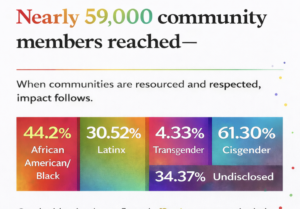
-
Nearly 59,000 community members reached across Texas
-
Among participants who shared demographic information:
-
44.2% identified as African American/Black
-
30.52% identified as Latinx
-
-
Gender identity data reflected inclusive and affirming engagement:
-
4.33% identified as transgender
-
61.30% identified as cisgender
- 34.37% chose not to disclose gender identity
-
Want to see the impact in action? We invite you to explore the Texas Health Impact Cohort Impact Report (2022–2025) to learn how the inaugural cohort of community leaders reached tens of thousands of Texans, strengthened grassroots organizations, and advanced HIV prevention, education, access to care, and stigma reduction across the state. Their achievements are a powerful reminder of what is possible when communities are equipped, connected, and invested in for the long term.